Scheduled floor care
Run planned cleaning routes during operating windows that fit site access and traffic.
Solution
Automate repeatable floor-care routes while keeping the deployment tied to the surfaces, traffic, operating schedule, and cleaning standard of your facility.
Discuss this operation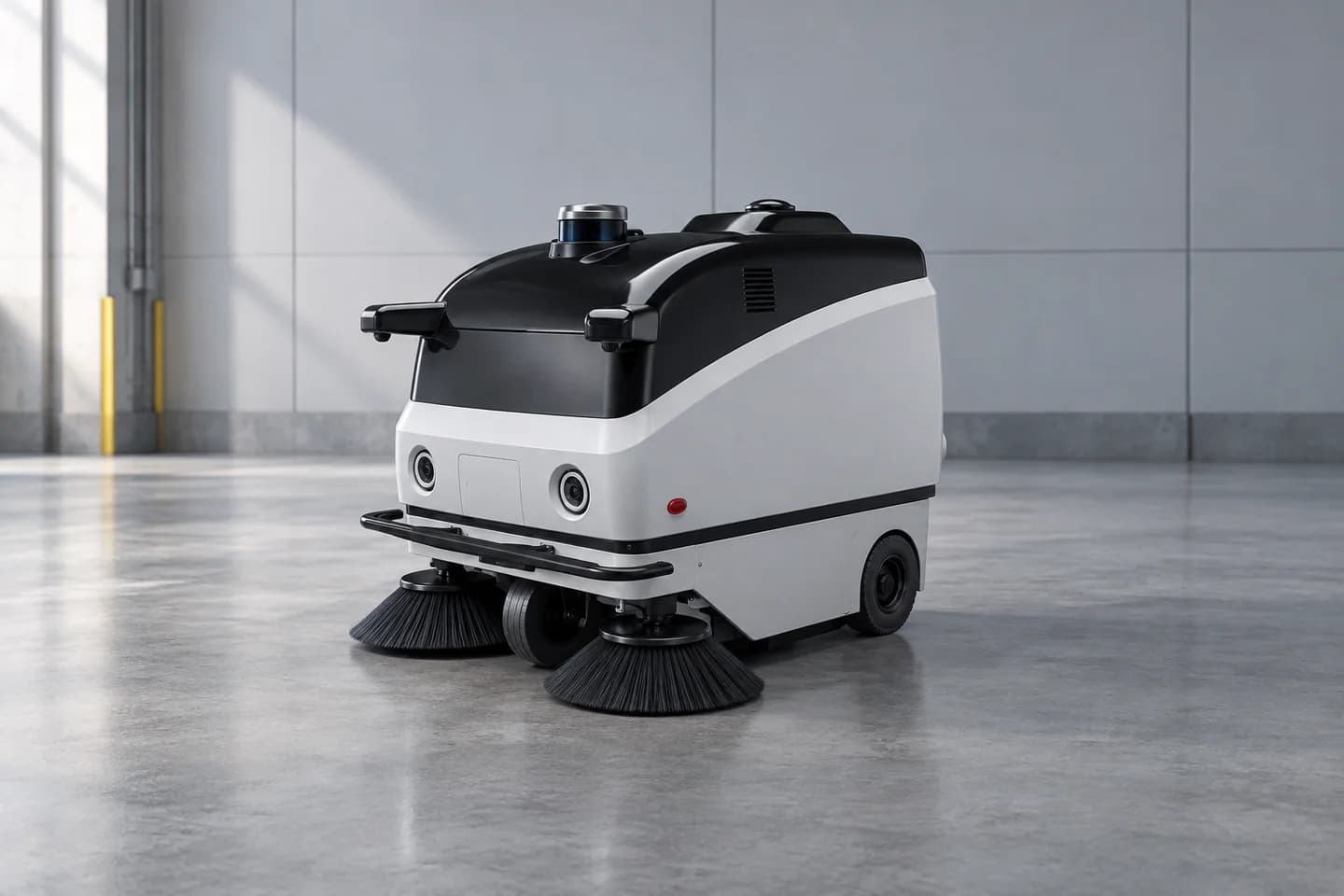
Coverage area alone does not define the job. Surface type, debris, traffic, obstacles, charging, water handling, and the required finish all shape the system.
Run planned cleaning routes during operating windows that fit site access and traffic.
Cover parking, warehouse, or campus areas with routes designed around recurring debris and obstacles.
Assign different areas, frequencies, or cleaning modes based on operational priority.
Define where staff prepare, refill, inspect, recover, or take over work the robot should not perform.
These inputs help determine the autonomy approach, vehicle configuration, integrations, and validation plan.
Automation may not be the right fit for areas dominated by stairs, dense movable clutter, detailed manual cleaning, or conditions outside the selected machine’s operating limits.
Ramps, columns, wheel stops, vehicle traffic, outdoor exposure, and recurring debris.
Aisles, loading areas, pallets, forklifts, dust, and changing operational zones.
Mixed surfaces, public or employee traffic, multiple buildings, and scheduled access.
No. A pilot should define which repeatable routes are suitable for automation and which preparation, detailed, or exception work remains with staff.
The traffic pattern and operating rules must be reviewed on site. The route, schedule, platform, and safeguards are configured around the actual environment.
It may be better to validate one representative area first. Expansion can follow after coverage, handoffs, and operating procedures meet agreed criteria.
Tell us the area to be cleaned, surface types, typical debris, operating hours, traffic conditions, and how cleaning is handled today.