Garage sweeping
Run repeatable coverage routes through drive aisles and selected parking zones.
Industry
Configure autonomous cleaning and site-service routes around ramps, columns, wheel stops, changing vehicle traffic, debris, and the operating schedule of your parking facility.
Discuss this operation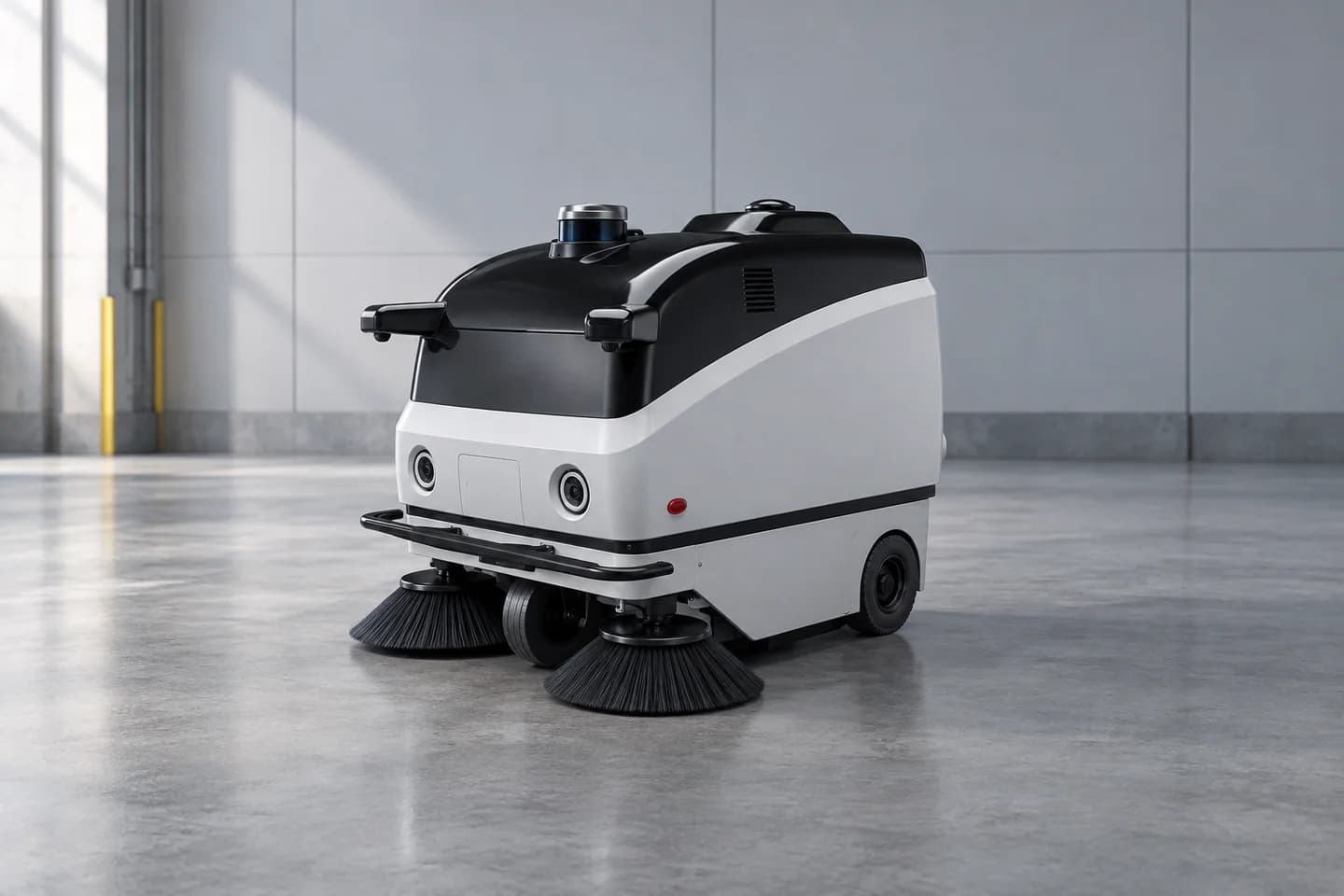
A facility’s geometry, occupancy cycle, surface condition, drainage, and debris pattern determine where automation is practical.
Run repeatable coverage routes through drive aisles and selected parking zones.
Coordinate cleaning zones with predictable periods of lower vehicle and pedestrian traffic.
Address recurring debris near entrances, exits, ramps, and exposed edges where the platform is suitable.
Define service frequency, charging, handoffs, and exclusions by level or operating zone.
These inputs help determine the autonomy approach, vehicle configuration, integrations, and validation plan.
A facility may not be ready when grades, curbs, drainage, connectivity, traffic, or storage fall outside the selected platform’s limits and cannot be addressed in the operating plan.
Multiple levels, ramps, columns, limited connectivity, and changing occupancy.
Outdoor exposure, larger zones, curbs, crossings, and weather-dependent operation.
Facilities linked to broader service roads, buildings, and site-operations teams.
The facility must be assessed. A pilot defines suitable zones, schedules, traffic rules, exclusions, and procedures for blocked paths or changing occupancy.
Ramp grade, traction, turning geometry, localization, connectivity, and safe operating limits must all be validated for the selected platform.
Dynamic obstacles and changing access are expected considerations. The route strategy and exception process must fit the actual occupancy pattern.
Provide the facility layout, approximate area, surface type, ramp grades, operating schedule, traffic pattern, debris, and current cleaning process.